Website
Scooter
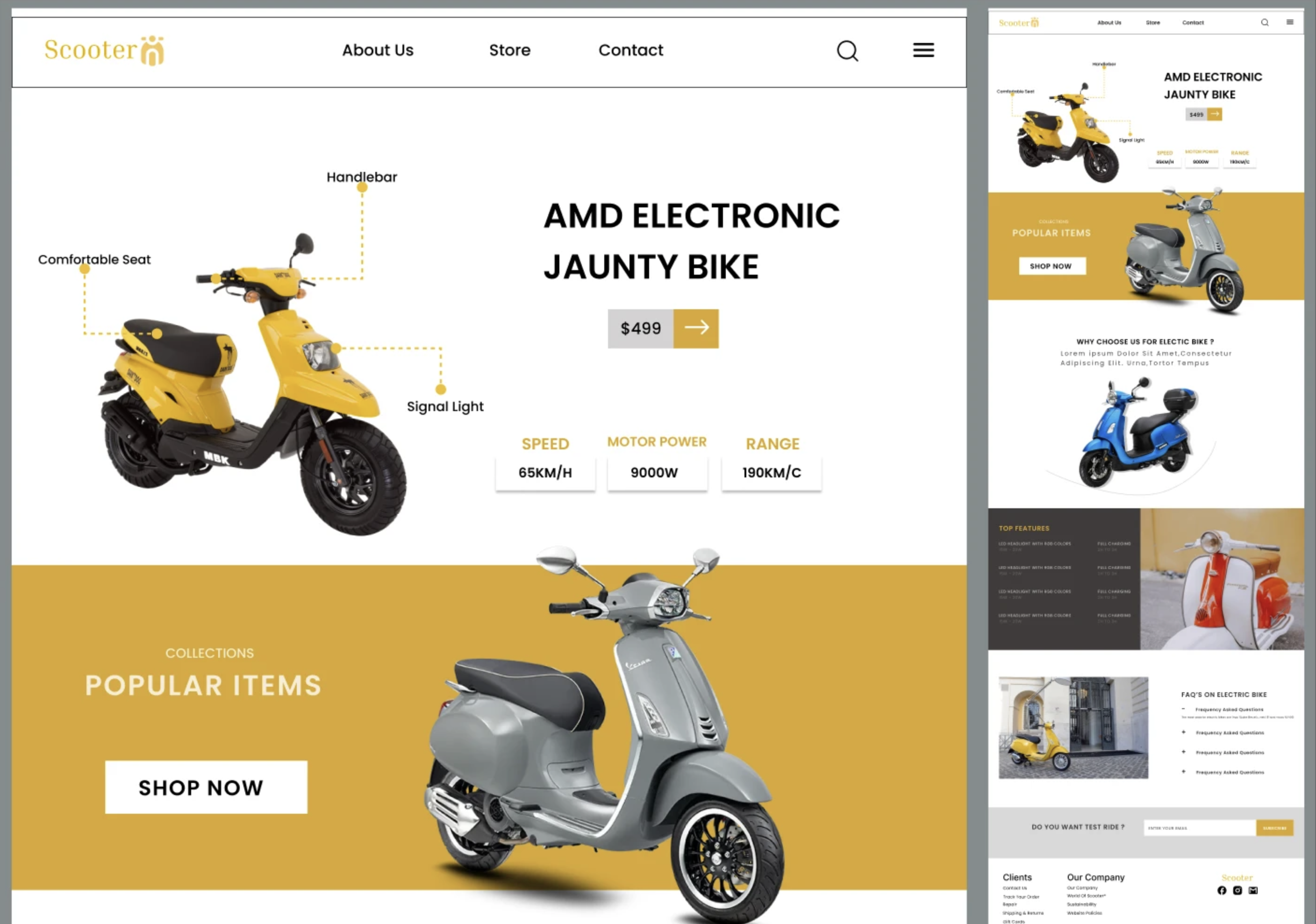
Scooter is a modern e-commerce website concept designed for electric scooter brands and mobility businesses. The platform was created to showcase products through a visually engaging shopping experience that highlights technical specifications, product benefits, and purchasing options while maintaining a clean and premium brand identity.
Project Overview
Scooter was designed as a modern e-commerce experience for the growing electric mobility market. With the increasing demand for electric scooters and environmentally friendly transportation solutions, many brands struggle to present their products in a way that effectively communicates both the technical value and the lifestyle appeal of their vehicles. The objective of this project was to create a website capable of transforming a simple product catalog into an engaging digital experience that helps users discover, understand, and ultimately purchase electric scooters with confidence.
My role in this project covered the complete UX and UI design process, starting from research and information architecture to visual design and user journey optimization. Before creating the interface, I analyzed how users typically browse vehicle-related products online and identified a common issue found in many e-commerce websites within this industry. Most platforms either focus heavily on technical specifications while neglecting visual presentation or prioritize aesthetics without providing enough information for purchasing decisions. The challenge was to find a balance between both aspects and create an experience that feels informative, modern, and conversion-oriented.
The design process began in Figma where I developed the overall structure of the platform, user flows, wireframes, and visual identity. The homepage was designed around product storytelling, allowing visitors to immediately understand the value of each scooter through a combination of large product visuals, highlighted specifications, and clear calls to action. Rather than presenting technical information as a separate section, important details such as speed, motor power, and battery range were integrated directly into the hero section to reduce the distance between product discovery and decision making.
One of the main challenges during the project was creating a layout that could effectively showcase product features without overwhelming the user. Electric scooters often require customers to compare specifications before making a purchase, so the interface had to provide important information while maintaining a clean and visually appealing presentation. To solve this, I used a structured content hierarchy supported by large imagery, generous spacing, and focused typography that guides the user’s attention toward the most relevant information at each stage of the browsing experience.
From a visual perspective, the project was built around a minimalist design language combining neutral backgrounds with a warm golden accent color. This approach helps create a premium and modern identity while ensuring that the scooters remain the visual focal point of the website. Product photography plays a central role throughout the experience, allowing visitors to connect emotionally with the products while still having access to the technical information required for purchasing decisions.
The project was designed with scalability in mind and can easily evolve into a complete e-commerce ecosystem. Beyond the product showcase experience, the platform can support advanced product filtering, online payments, inventory management, customer accounts, order tracking, and promotional campaigns. The responsive layout also ensures a consistent shopping experience across desktop, tablet, and mobile devices.
From a development perspective, the platform was designed in Figma and prepared for implementation using a modern web technology stack. Next.js was selected as the ideal frontend framework due to its performance, SEO capabilities, and scalability for e-commerce platforms. Tailwind CSS would be used to maintain a consistent and efficient design system, while Node.js and Express would power the backend services responsible for product management, customer interactions, and order processing. PostgreSQL would serve as the primary database for storing products, inventory, customer accounts, and transaction data. This architecture ensures long-term scalability while maintaining excellent performance and maintainability.
Scooter demonstrates my ability to design digital commerce experiences that combine strong visual presentation with practical business objectives. The project focuses on helping brands communicate product value more effectively while creating a seamless path from product discovery to purchase. By combining user-centered design principles, modern interface design, and scalable development architecture, the platform provides a solid foundation for businesses looking to establish a professional presence in the electric mobility industry.
Tools & Technologies: Figma, Next.js, TypeScript, Tailwind CSS, Node.js, Express.js, PostgreSQL, Vercel, Git, GitHub.
Project Information
- Category
- Website
- Last updated
- August 18, 2026